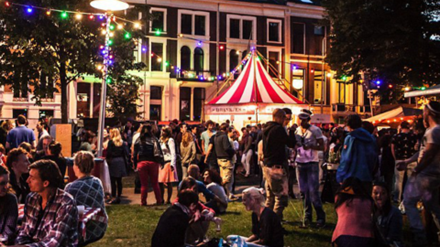
As a young child, I was told that it is normal for everything to become more expensive. This is called inflation and is said to be necessary to keep the economy running. It would, however, take several more decades before I began to truly understand what inflation actually is. Hence this short story about inflation.
The Food Truck Festival
“There once was a food truck festival. Now imagine for a moment that I am the organizer. You and other people come to sell food at this festival think hamburgers, fries, pasta, drinks, and so on. But before your food truck opens, I charge you a stall fee: a kind of rent you pay to be allowed to operate at the festival. On top of that, I also charge a waste disposal fee, an energy cost, and a kind of insurance premium.
The Free Tokens
At the festival, we use tokens to pay for everything. Visitors arrive at the entrance and buy tokens to purchase food and drinks inside the festival. One token costs one euro. Each food truck owner calculates the cost of their products and decides how many tokens they will charge.
The festival is now in full swing and is a success. In the evening, I receive a phone call from a few friends who have heard about the festival and ask whether they can still come by. I tell them they are more than welcome and that I will take care of the tokens. Since I printed the tokens myself, I can easily print a few extra. That way, my friends do not have to buy them at the entrance. I am generous and tell them it’s on me.
All evening long, my friends and I buy food and drinks without actually paying for them. Nobody notices. Our tokens are worth just as much as the tokens that were paid for with euros.
The Consequences
The festival eventually comes to an end, and everyone who has earned tokens now wants to exchange them with me. I tell them I will transfer the correct amount to their bank accounts, but I am now faced with the problem that more tokens are in circulation than there are euros backing them. If I divide the euros among the tokens, each token is no longer worth one euro, but closer to ninety-five cents. At that moment, it becomes clear that I have caused 5% inflation by handing out free tokens. I come up with a nice story explaining why this was necessary and hope everyone accepts being paid fewer euros than promised, and that I can get away with it again next year.
The following year, all the food trucks have ultimately adjusted their prices. And so we end up in a spiral of ever more expensive services and products.”
Two Types of Inflation
That concludes my little story about inflation. The analogy is not perfect, but when people gain access to free money without having provided labor, it does create inflation, effectively an additional tax on everyone who uses the currency. Everyone’s money is quietly and skillfully diluted.
Everyone’s money is quietly and skillfully diluted.
There is also something called price inflation. Imagine that a super-delicious Wagyu burger is being served at the festival and sells out very quickly. The food truck owner notices this and can raise the price of the burger, since demand exceeds supply. The price can rise higher and higher. This sends a signal to the market that the burger is highly desired. Eventually, other food trucks will notice and try to offer the same burger as well, or efforts will be made to increase supply. This type of price inflation is fairer than the previous one. You do not have to buy the Wagyu burger. The price rises due to the law of supply and demand, not because the currency is being diluted.
Moral of the story: in the end, anyone who has access to a money printer will use it sooner or later. If only there were a form of money that could not be created out of thin air.